

.webp)
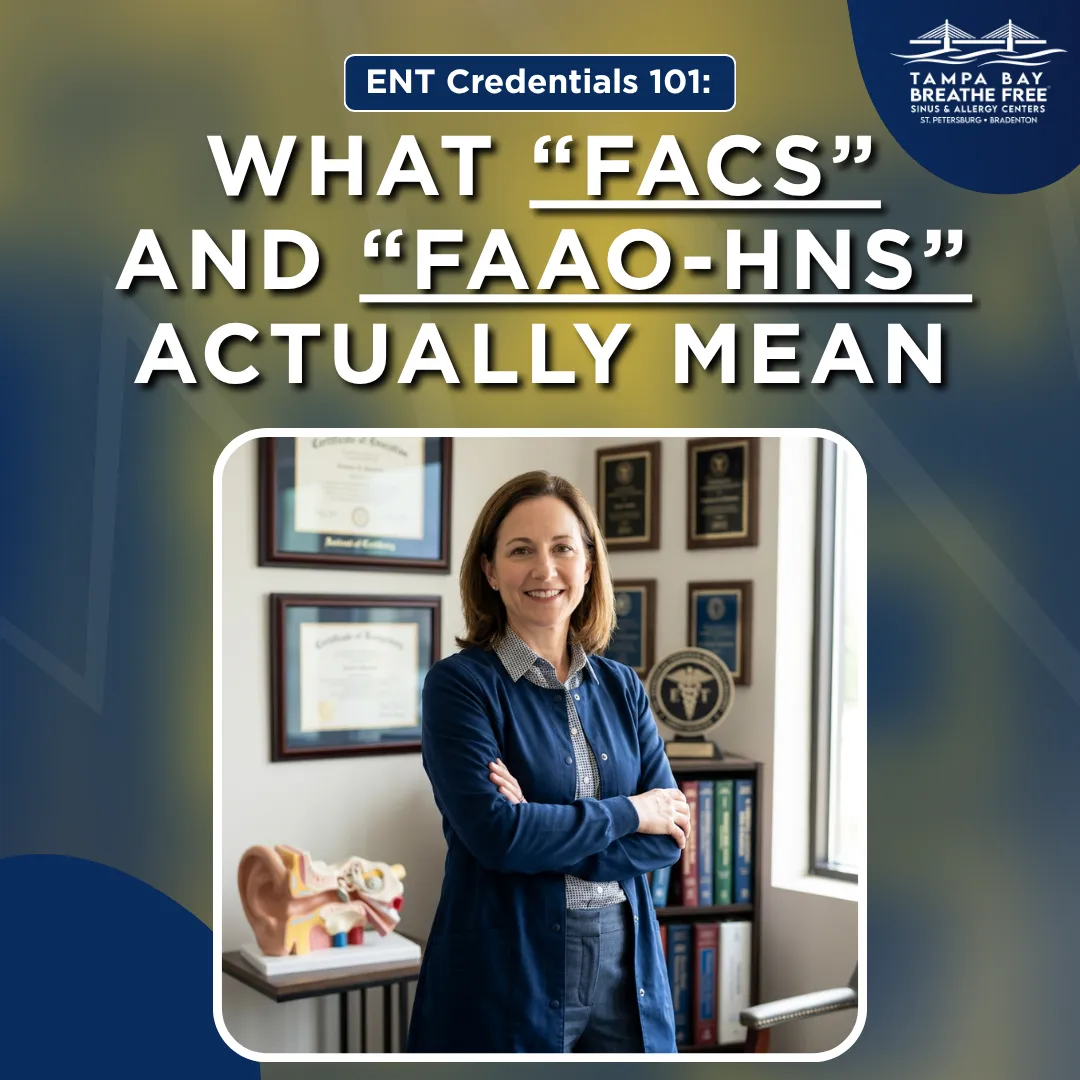
ENT Credentials 101: What “FACS” and “FAAO-HNS” Actually Mean
Choosing an ENT isn't always as simple as finding the closest office or reading a few online reviews.
As patients compare providers, they often notice a string of letters after a physician's name. Some are familiar, while others seem confusing. Credentials such as FACS and FAAO-HNS frequently appear on physician biographies, but many patients aren't sure what those designations actually mean or whether they should matter when choosing care.
At Tampa Bay Breathe Free Sinus & Allergy Centers, helping patients make informed healthcare decisions is an important part of the care experience. Understanding physician credentials can provide valuable context when evaluating providers and deciding where to seek treatment.
Why Physician Credentials Matter
Most people don't research ENT credentials out of curiosity.
They're looking for answers to recurring sinus infections, chronic congestion, allergies, hearing concerns, sleep-related breathing issues, or other symptoms affecting daily life. When choosing a provider, patients want confidence that their physician has the training and professional background necessary to evaluate and treat those concerns.
Credentials offer insight into a physician's education, professional involvement, and commitment to maintaining standards within their specialty. While they shouldn't be the only factor considered, they can help paint a more complete picture of a provider's qualifications.
What Does FACS Mean?
FACS stands for Fellow of the American College of Surgeons.
This designation is awarded to surgeons who have met specific professional requirements established by the American College of Surgeons. Physicians who hold the FACS credential have undergone a review process that evaluates their education, surgical training, qualifications, and ethical standards.
For patients, the FACS designation reflects a physician's participation in a respected surgical organization dedicated to advancing quality patient care. It is not the same as board certification, but it does indicate that the physician has met additional professional standards beyond basic licensing requirements.
What Does FAAO-HNS Mean?
FAAO-HNS stands for Fellow of the American Academy of Otolaryngology–Head and Neck Surgery.
Otolaryngology is the medical specialty focused on conditions affecting the ears, nose, throat, head, and neck. Physicians in this field diagnose and manage a wide range of concerns, including sinus disorders, allergies, hearing loss, dizziness, voice disorders, and sleep-related breathing conditions.
The FAAO-HNS designation reflects active participation within the primary professional organization dedicated to ENT medicine. It demonstrates ongoing engagement within the specialty and a commitment to professional standards, education, and developments in ENT care.
Credentials and Reviews Serve Different Purposes
Patient reviews can be incredibly useful.
They often provide insight into communication style, office experience, scheduling, and overall patient satisfaction. These factors matter because a positive healthcare experience involves much more than medical knowledge alone.
At the same time, reviews cannot tell you everything about a physician's qualifications. They don't provide details about medical education, surgical training, professional affiliations, or participation within specialty organizations. Looking at both patient experiences and professional qualifications and credentials often gives a more balanced view than relying on either one alone.
What About Board Certification?
Patients sometimes assume that FACS and FAAO-HNS are board certifications.
They are not.
Board certification is a separate credential that indicates a physician has completed specialty training and met rigorous standards established by a recognized certifying board. Many ENT physicians hold board certification along with professional designations such as FACS and FAAO-HNS.
Understanding the difference can help patients better evaluate physician profiles and understand what various credentials represent.
How Do I Know It's Time to Stop Waiting and Get Checked?
Many ENT conditions develop gradually.
What begins as occasional congestion may become a daily frustration. Allergy symptoms may start interfering with sleep. Hearing changes can affect conversations with family and coworkers. Sinus issues may begin limiting exercise, travel, or outdoor activities.
An ENT evaluation may be worth considering if:
- Symptoms continue for several weeks.
- Sinus infections repeatedly return.
- Congestion affects sleep quality.
- Hearing changes impact communication.
- Allergy symptoms interfere with daily life.
- Ear, nose, or throat concerns affect work, school, or recreation.
Often, the first step toward improvement is understanding what's causing the symptoms in the first place.
Understanding the Credentials Behind Your Care
Credentials such as FACS and FAAO-HNS represent professional achievements that help patients better understand a physician's background and involvement within the ENT field. While these designations don't tell the whole story, they provide useful information that can help guide healthcare decisions.
At Tampa Bay Breathe Free Sinus & Allergy Centers, patient education remains an important part of helping individuals feel informed and confident about their care. Understanding physician credentials is one more way patients can make thoughtful decisions when selecting an ENT provider and determining when it's time to seek evaluation.
If recurring sinus, allergy, hearing, or breathing concerns are affecting your daily life, Tampa Bay Breathe Free Sinus & Allergy Centers can help identify the cause.
Schedule an evaluation with Tampa Bay Breathe Free Sinus & Allergy Centers now!
The information provided in this article is for informational and educational purposes only and does not constitute medical advice. It is not intended to diagnose, treat, cure, or prevent any disease or medical condition. Always seek the guidance of your physician or other qualified healthcare provider with any questions you may have regarding a medical condition or treatment.
Results may vary: Treatment outcomes and health experiences may differ based on individual medical history, condition severity, and response to care.
Emergency Notice: If you are experiencing a medical emergency, call 911 or seek immediate medical attention.


