


Understanding Nasal Polyps and When Treatment Is Needed in St. Petersburg and Bradenton, FL
Persistent sinus issues, such as nasal congestion, breathing difficulties, postnasal drip, and sinus pressure, can be frustrating. If left unmanaged, they may affect daily life, productivity, sleep, and comfort, depending on severity.
If your ENT doctor in St. Petersburg and Bradenton, FL, determines that your symptoms are manageable with standard medications, they may evaluate for a range of other possible causes, which can include nasal polyps.
Nasal polyps are small, noncancerous growths that can develop in the nasal and sinus passages. They can block airways and make breathing difficult.
Let’s learn more about what nasal polyps are, their symptoms, and what your treatment options are.
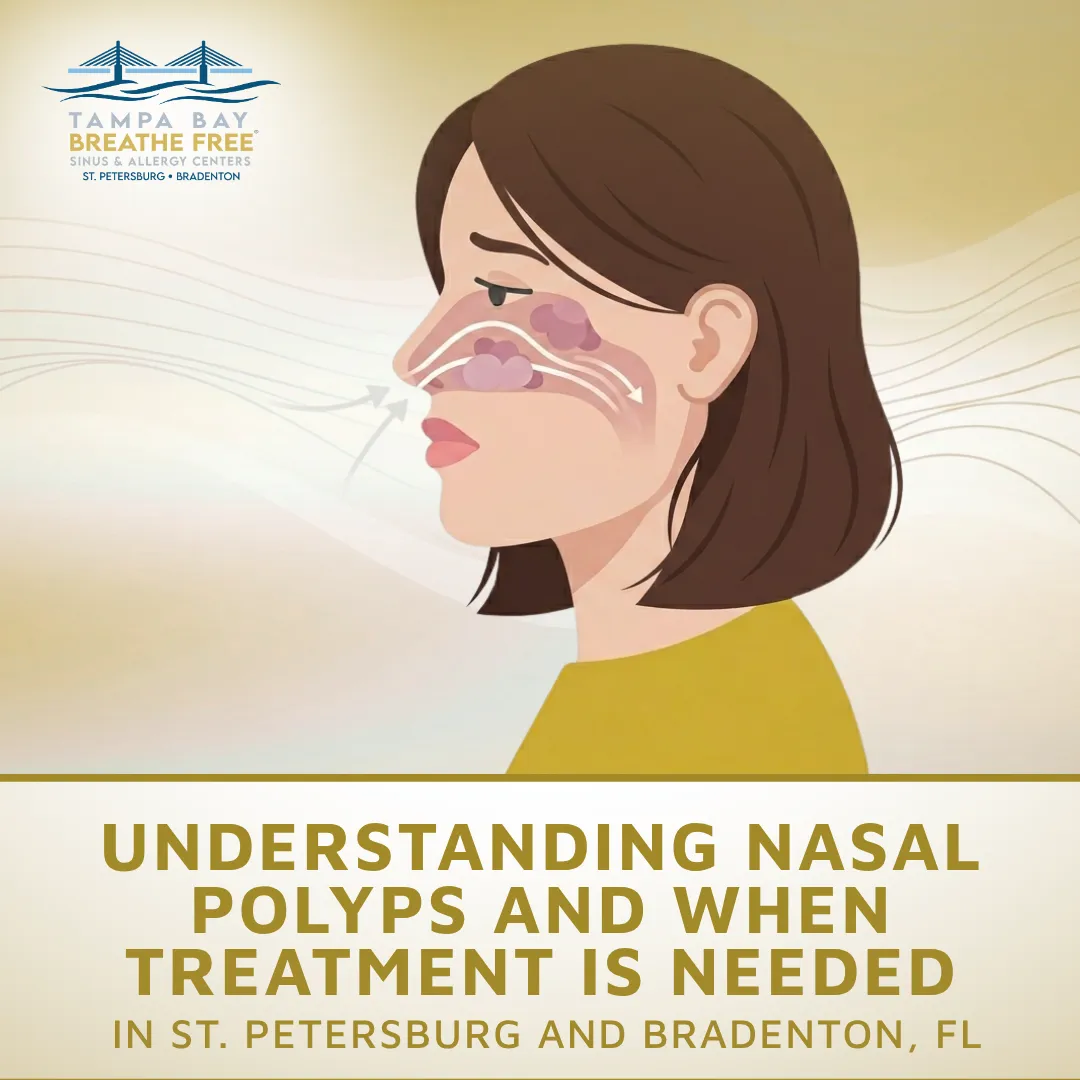
What Are Nasal Polyps?
Nasal polyps are small and benign (non-cancerous) growths that form in the tissues lining the nasal and sinus passages. They’re jelly-like growths that often take on a teardrop shape. They often form in clusters and on both sides of the nose. Though sometimes, individual growth or growth only on one side of the nose is also possible.
In many cases, small or individual polyp growth doesn’t cause significant sinus issues. However, larger or cluster growths can cause breathing difficulties, especially if the polyps become irritated or swollen. In some cases, untreated nasal polyps may be associated with an increased risk of sinus infections.
Anyone can develop nasal polyps, though there is a higher risk for people with pre-existing conditions such as asthma, allergies, and chronic sinusitis.
The Symptoms of Nasal Polyps
Small or individual nasal polyps usually don’t cause significant issues. However, larger or cluster growths do. Common symptoms of nasal polyps can include:
- Stuffy nose
- Nasal congestion
- Runny nose
- Difficulty breathing through the nose
- Sinus pressure
- Postnasal drip (mucus dripping down the back of the throat)
- Loss or a decreased sense of taste and/or smell
- Headaches
- Nosebleeds
- Snorning
The Causes of Nasal Polyps
Currently, the exact cause of nasal polyps is still unknown. Healthcare researchers have yet to determine why some people develop nasal polyps, but others don’t.
What we do know is that inflammation in the nasal and sinus passages plays a key role in the development of nasal polyps. As such, chronic sinusitis is often associated with the development of nasal polyps. Chronic sinusitis is a long-term irritation, swelling, and inflammation of the tissues lining the sinuses, which can last for 12 weeks or more.
Genetics can also play a role in the development of nasal polyps, as genes that affect the body’s immune system and inflammatory response can make one more likely to develop nasal polyps throughout their life. If you have family members who have or have had nasal polyps, you are more likely to develop them as well.
Moreover, several risk factors can increase the risk of developing nasal polyps. This can include asthma, allergies, cystic fibrosis, and aspirin sensitivity.
Nasal Polyps Diagnosis
An ENT specialist may evaluate your symptoms. They will begin the diagnostic process with a thorough physical examination of your nasal and sinus passages.
They will ask you to explain your symptoms and how long you’ve been experiencing them. They will also carefully review your medical history, especially concerning asthma, allergies, and sinus infections.
Some tests they may order to help with the diagnosis of nasal polyps include nasal endoscopy, allergy testing, blood testing, CT scan, MRI, and polyp biopsy.
Nasal Polyps and Treatment Options in St. Petersburg and Bradenton, FL
Nasal polyp treatment varies depending on the severity of the symptoms and the underlying causes. Depending on clinical findings and other individual health factors, treatment may include:
Medications for nasal polyps
Medications are typically the first course of treatment for nasal polyps, including:
- Decongestants
- Oral corticosteroids
- Nasal corticosteroids
- Saline nasal sprays or rinses
- Steroid nasal sprays
- Antihistamines (for allergy-related symptoms)
- Antibiotics (for bacterial sinusitis-related symptoms)
While most medications don’t remove nasal polyps, they can help manage symptoms. Additionally, certain medications, such as corticosteroids, may help reduce inflammation and, in some cases, may shrink nasal polyps. Results vary based on individual health factors.
Surgery for nasal polyps
If medications don’t seem to work in managing the growths and your symptoms, your ears, nose, and throat doctor in Bradenton and St. Petersburg, FL, may recommend sinus surgery in certain cases. This may include:
- Balloon sinuplasty, which uses a small balloon catheter to open blocked sinus and nasal passages
- Polypectomy, which surgically removes nasal polyps
- Functional endoscopic sinus surgery (FESS), which uses specialized instruments to remove nasal polyps, damaged bone, or diseased tissue that may be causing persistent nasal blockages
All procedures can potentially carry risks, which your doctor will discuss with you. Outcomes vary, and results are not guaranteed.
Frequently Asked Questions About Nasal Polyps in St. Petersburg and Bradenton, FL
Do nasal polyps go away on their own?
Nasal polyps do not usually resolve on their own and may require medical management depending on the case. While small growths don’t typically cause significant issues, larger growths can and will likely need medical intervention, according to your clinical findings.
Can I prevent nasal polyps?
It’s not always possible to prevent the development of nasal polyps. However, there are some measures you can take to manage the conditions typically associated with nasal polyps.
- Keep your house clean and free from allergens and irritants
- Avoid breathing allergens and irritants
- Practice good hygiene
- Use a saline nasal spray to flush out allergens and irritants
- Use an indoor humidifier to keep sinus passages moist
- Take all prescribed medications for managing allergies and asthma as directed by your physician
When should I see a sinus specialist in St. Petersburg and Bradenton, FL, for nasal polyps?
Consider seeing a sinus specialist if you experience the following:
- Recurring or frequent sinus infections
- Difficulty breathing through the nose, which can affect daily activities, sleep, and comfort
- Persistent symptoms that last longer than 10 days
- Sinus symptoms that don’t respond to standard medications and treatment
- A diminished sense of smell
Learn More About Nasal Polyps and Your Treatment Options in St. Petersburg and Bradenton, FL
Tampa Bay Breathe Free is an ENT clinic with locations in St. Petersburg and Bradenton, FL. Patients who wish to learn more about our clinic, specialties, and services can visit and explore our website.
The information provided in this article is for informational and educational purposes only and does not constitute medical advice. It is not intended to diagnose, treat, cure, or prevent any disease or medical condition. Always seek the guidance of your physician or other qualified healthcare provider with any questions you may have regarding a medical condition or treatment.
Results may vary: Treatment outcomes and health experiences may differ based on individual medical history, condition severity, and response to care.
Emergency Notice: If you are experiencing a medical emergency, call 911 or seek immediate medical attention.


